
Tired all the time, low drive, workouts that stopped paying off? Low testosterone could be part of the story. Search for answers and you’ll find two very different camps: clinics offering testosterone replacement therapy (TRT), and supplement brands promising to boost your levels naturally.
This guide compares both sides honestly. You’ll learn how to confirm low T, which natural approaches have real evidence, what’s inside most “booster” bottles, how safe TRT really is, and how to choose the right low testosterone treatment for you.
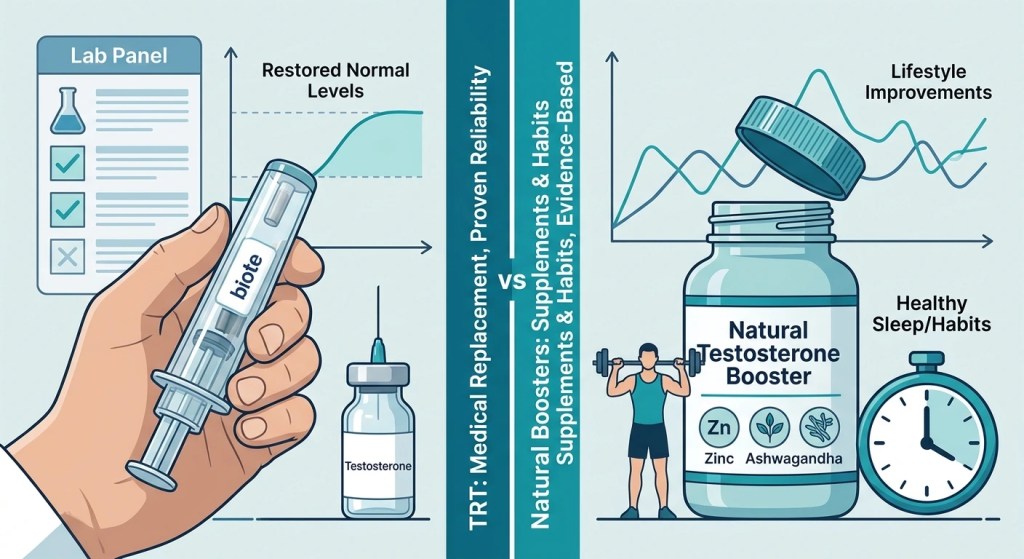
| The short answer: TRT or natural boosters? For men with confirmed low testosterone, TRT is the only low testosterone treatment proven to reliably bring levels back to normal. Most over-the-counter boosters lack good evidence: in a review of 50 products, only 24.8% of claims had supporting data. Lifestyle changes are different. Losing excess weight and sleeping enough can raise testosterone meaningfully, especially in men with borderline levels. Many men do best with both. |
Key Takeaways
- Low T should be confirmed with two early-morning blood tests and matching symptoms.
- Weight loss and better sleep are the best-supported natural ways to raise testosterone.
- Most testosterone booster supplements have little or no research behind their claims, and some are tainted with hidden steroids.
- TRT reliably restores levels. A major 2023 trial found no increase in heart attack or stroke risk.
- TRT can reduce sperm production, so fertility plans matter before you start.
- Any low testosterone treatment works best with labs, monitoring and healthy habits.
Step One: Confirm You Actually Have Low Testosterone
Fatigue, low libido and weight gain have many causes, so testing comes first. The American Urological Association (AUA) uses a total testosterone level below 300 ng/dL as a reasonable cutoff. It recommends confirming low T with two early-morning tests on separate days, alongside symptoms (AUA guideline summary).
Common symptoms include:
- Low sex drive or weaker erections
- Fatigue and low motivation
- Loss of muscle and strength
- More belly fat
- Low mood, irritability or brain fog
If your levels come back low, follow-up tests such as LH and prolactin help find the cause. Our guide to men’s health blood work explains which tests matter and how to prepare.
What Causes Low Testosterone?
Testosterone naturally declines with age, by roughly 1% to 2% a year (ScienceDaily). But age is rarely the whole story. Other common causes include:
- Excess weight, especially belly fat
- Poor or short sleep
- Type 2 diabetes
- Medications, particularly long-term opioids and corticosteroids
- Pituitary or testicular problems
The cause matters, because it shapes which low testosterone treatment makes sense. A man whose levels dropped with weight gain has different options than a man with a pituitary problem.
Natural Ways to Raise Testosterone That Have Real Evidence
Lose excess weight
This is the strongest natural lever. A meta-analysis of 24 studies found that both low-calorie diets and bariatric surgery significantly raised testosterone in men with obesity. The more weight men lost, the bigger the increase (PubMed).
If weight has been hard to move, our medically guided weight loss program can help. Read our guide to weight loss injections to see how GLP-1 medications fit in.
Protect your sleep
In a University of Chicago study published in JAMA, young men who slept under 5 hours a night for one week saw their testosterone drop by 10% to 15%. That’s about the same decline as 10 to 15 years of aging (ScienceDaily).
Train with weights and stay active
Regular strength training builds muscle, improves insulin sensitivity and supports fat loss, all of which help your hormones work in your favor.
Review your medications
If you take long-term opioids or corticosteroids, ask your prescriber whether they could be affecting your testosterone. Never stop a prescribed medication on your own.
Natural Testosterone Boosters: What’s Really in the Bottle?
Testosterone booster supplements are a big business, but the evidence is thin. A 2019 study in The World Journal of Men’s Health analyzed 50 popular products containing 109 different ingredients. Over 60% of the products had no research backing their claims. Only 24.8% of claims of boosting testosterone had supporting data, and about 10% of the ingredients had actually been linked to lower testosterone. Two products contained more zinc than the upper safe limit (SMSNA).
Popular booster ingredients and the evidence
| Ingredient | What the research shows |
| Zinc | Among the most common ingredients. May matter if you’re truly deficient; excess zinc can be harmful |
| Vitamin D | In a 12-week trial of 100 men with low testosterone, vitamin D had no effect on testosterone levels |
| Ashwagandha | One 8-week trial in overweight men aged 40 to 70 found a 14.7% greater rise in testosterone than placebo. The authors called for larger studies |
| Fenugreek, Tribulus, maca | Common in products, but evidence for raising testosterone in men is limited and inconsistent |
Sources: vitamin D trial, ashwagandha trial.
The hidden danger: tainted supplements
FDA has repeatedly warned that some bodybuilding products sold as supplements contain hidden anabolic steroids or SARMs. These can cause liver injury, heart attack, stroke, infertility and testicular shrinkage (FDA). Supplements don’t need FDA approval before they’re sold, so you can’t assume a product is safe or matches its label.
How TRT Works
Testosterone replacement therapy replaces the hormone your body isn’t making enough of. For a full overview, read our complete guide to TRT. It comes in several forms:
- Injections given on a set schedule
- Gels, creams and patches applied daily to the skin
- Pellets placed under the skin that release hormone gradually for months (see our testosterone pellets guide)
FDA approves testosterone for men who have low levels along with an associated medical condition. Its labels still note that benefit in age-related low testosterone alone hasn’t been established (FDA).
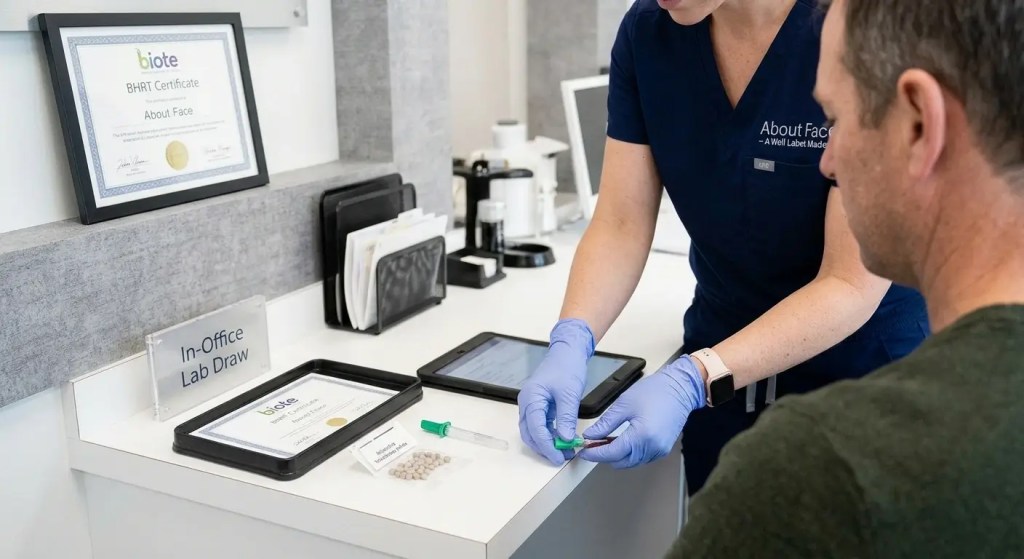
Our bioidentical hormone replacement therapy program uses Biote pellets, which typically last three to five months. Treatment starts with a thorough hormone panel and in-office concierge lab draws, so your plan is built on your own numbers.
Is TRT Safe? What the Latest Research Shows
For years, heart risk was the biggest worry. The TRAVERSE trial, published in 2023, tested that directly in 5,246 men aged 45 to 80 with low testosterone and heart risk factors. Major heart events (heart attack, stroke or cardiovascular death) occurred in 7.0% of men on testosterone and 7.3% on placebo (TCTMD).
Based on that trial, FDA removed the cardiovascular risk language from the boxed warning on all testosterone products in February 2025. It also added a class-wide warning about increases in blood pressure (FDA).
TRT still has real risks to monitor:
- Heart rhythm and clots. In TRAVERSE, atrial fibrillation (3.5% vs. 2.4%), acute kidney injury (2.3% vs. 1.5%) and pulmonary embolism (0.9% vs. 0.5%) were more common on testosterone.
- Thicker blood. Endocrine Society guidance calls for holding therapy if hematocrit rises above 54% (MDedge).
- Fertility. Outside testosterone signals the brain to slow the testes, which can reduce or stop sperm production (Healio).
- Higher blood pressure, now a labeled class-wide risk.
That’s why safe TRT means regular labs, not a one-time prescription. Curious about cosmetic side effects? Read does TRT cause hair loss?
TRT vs. Natural Boosters: Side-by-Side
Comparing your low testosterone treatment options
| TRT | Lifestyle changes | OTC booster supplements | |
| Reliably raises testosterone? | Yes, in men with low T | Often, especially with weight loss | Rarely proven |
| Strength of evidence | Strong, including large trials | Good | Weak; most products untested |
| Regulation | Prescription only; FDA-approved forms available | Not applicable | Not FDA-approved before sale |
| Effect on fertility | Can suppress sperm production | Neutral to helpful | Unknown; tainted products can harm it |
| Monitoring | Regular labs required | Optional | None |
| Best for | Confirmed low T with symptoms | Everyone, and first-line for borderline levels | Not recommended as a substitute for care |
Which Low Testosterone Treatment Is Right for You?
- Borderline levels and extra weight? Start with weight loss, sleep and training, then retest. Many men see real gains.
- Confirmed low T with clear symptoms? TRT is likely worth discussing, alongside lifestyle changes.
- Planning to have children? Talk about fertility-preserving options before starting any testosterone.
- Tempted by a supplement? Show it to your provider first, and buy only third-party tested products.
For most men, the best treatment for low testosterone isn’t either-or. It’s the right medical treatment, when needed, built on habits that support your hormones. Learn more in our guide on whether hormone replacement therapy is right for you.
Low Testosterone Treatment in Stratham, NH
At About Face — A Well Labs+ Medspa, we start with your symptoms, history and a thorough hormone panel, drawn right in our office. If your levels are low, we’ll walk you through your options, from lifestyle changes and medically guided weight loss to Biote pellet hormone replacement therapy with ongoing monitoring.
We welcome men from Stratham, Portsmouth, Exeter and across the New Hampshire Seacoast at 64 Portsmouth Ave, Suite 4. Explore our wellness services, meet our team, book a virtual consultation, or call (603) 580-5296.
| Stop guessing about your testosterone. Book your hormone consultation and in-office lab draw at About Face — A Well Labs+ Medspa in Stratham today. |
Frequently Asked Questions
Do natural testosterone boosters work?
Most don’t have good evidence. In a review of 50 booster supplements, over 60% had no research supporting their claims. Lifestyle changes like losing excess weight and getting enough sleep have much stronger evidence for raising testosterone.
What is the best low testosterone treatment?
For men with confirmed low testosterone and symptoms, TRT is the most reliable way to restore normal levels. For men with borderline levels, weight loss, better sleep and strength training are often the best first step.
What testosterone level is considered low?
The American Urological Association uses a total testosterone below 300 ng/dL as a reasonable cutoff, confirmed with two early-morning tests on separate days and accompanied by symptoms.
Is TRT safe for your heart?
In the 2023 TRAVERSE trial of more than 5,000 men with heart risk factors, testosterone did not increase the rate of heart attack, stroke or cardiovascular death compared with placebo. It did slightly raise the rates of atrial fibrillation, kidney injury and pulmonary embolism, so monitoring is important.
Does TRT affect fertility?
Yes. Testosterone therapy can reduce or stop sperm production. If you may want children, discuss fertility-preserving options with your provider before starting.
How long does TRT take to work?
Many men notice changes in energy and mood within a few weeks, while full benefits for body composition and libido can take a few months. Follow-up labs confirm your levels are on target.
Can I stop TRT once I start?
Yes, but symptoms of low testosterone usually return, and your body’s own production may take time to recover. Any plan to stop should be made with your provider.