
Walk down any pharmacy aisle and you’ll find hair gummies, biotin bottles and “hair, skin and nails” formulas promising thicker hair. Most of them don’t tell you the most important fact: vitamins only help your hair if your body is actually short on them.
This guide cuts through the marketing. You’ll learn what vitamins are good for hair growth, which ones are overhyped, which ones can make shedding worse, and what to do when vitamins aren’t the answer.
| The short answer: what vitamins are good for hair growth? Vitamins and minerals help hair growth mainly when you’re deficient. The best-supported nutrients are iron (measured as ferritin), vitamin D and zinc, along with enough protein. Biotin rarely helps people who aren’t deficient. Too much vitamin A or selenium can actually cause hair loss. The smartest move is to test your levels first, then supplement only what you’re missing. |
Key Takeaways
- Hair follicles are among the fastest-growing cells in your body, so they’re sensitive to nutrient shortfalls.
- Correcting a real deficiency can help shedding. Taking more than you need doesn’t add extra growth.
- Low iron stores are common in women with hair loss.
- Biotin only helped in reported cases where people had an underlying condition.
- Excess vitamin A and selenium are known causes of hair loss.
- Pattern hair loss is driven by genes and hormones, so vitamins alone won’t fix it.
Why Vitamins for Hair Growth Only Work When You’re Low
Each hair follicle cycles through growth, rest and shedding. During the growth phase, follicles divide rapidly and need a steady supply of protein, iron, zinc and vitamins. When a nutrient runs low, your body sends it to more essential organs first. Hair is expendable, so it’s often one of the first places a deficiency shows up.
That’s why fixing a shortfall can reduce shedding. But once your levels are adequate, extra vitamins don’t push follicles to grow faster. A Cleveland Clinic hair specialist made the same point at the American Academy of Dermatology meeting: many nutrients may help in deficiency, but the data don’t support routine use for hair loss without one (MDedge).
Vitamins for Hair Growth That Actually Have Evidence
Iron and ferritin
Ferritin is your body’s iron storage protein, and it’s one of the most useful tests for hair shedding. A 2022 meta-analysis of 36 studies and more than 10,000 women found that women with non-scarring hair loss had lower ferritin levels than women without it. The link was stronger before menopause (Skin Appendage Disorders).
These studies show an association, not proof that iron alone causes or cures hair loss. Iron can also be harmful in excess, so test before you take it.
Vitamin D
Low vitamin D has been linked to androgenetic alopecia, and dermatologists advise supplementing when levels are low (MDedge). Studies have also found lower vitamin D in people with alopecia areata, an autoimmune form of hair loss, with the lowest levels in the most severe cases (Ro summary of studies).
Zinc
Zinc deficiency can cause hair loss, but studies on zinc supplements for hair are mixed. It’s worth checking if you have risk factors, and supplementing if you’re low (MDedge). More isn’t better, since high doses of zinc can cause other problems.
Biotin
Biotin is the most heavily marketed hair vitamin, and the evidence is the weakest for healthy people. A 2017 review found 18 reported cases where biotin improved hair or nails. Every one of those patients had an underlying problem, such as a biotin deficiency or a rare hair condition. The authors concluded there isn’t enough evidence to support biotin for healthy people (Skin Appendage Disorders).
Biotin deficiency is uncommon. Yet many hair supplements contain far more than the adult daily need of about 30 mcg (MDedge).
Vitamin B12 and folate
Deficiencies can contribute to shedding, but there isn’t enough evidence to recommend these vitamins for hair loss unless you’re actually low (MDedge). Strict vegan diets and certain digestive conditions raise the risk of low B12, so testing makes sense if either applies to you.
Vitamin C
Vitamin C helps your body absorb iron from plant foods and supports collagen production. It’s rarely low in people who eat fruits and vegetables, so it matters most as a partner to iron.
Protein
Hair is made mostly of the protein keratin. Crash diets and very low protein intake are well-known triggers for telogen effluvium, a temporary, all-over shedding that usually appears two to three months after the trigger (Journal of Clinical and Diagnostic Research).
Vitamins and Minerals That Can Cause Hair Loss
Here’s what most hair gummy labels won’t tell you. Some nutrients cause shedding when you take too much:
- Vitamin A. Too much preformed vitamin A (not beta carotene) can contribute to hair loss (MDedge).
- Selenium. The adult upper limit is 400 mcg a day, and brittle or lost hair is a classic sign of too much (NIH Office of Dietary Supplements). In 2008, a liquid supplement with about 200 times its labeled selenium poisoned 201 people across 10 states. About 72% lost hair (SupplySide SJ).
- Vitamin E. Not supported for hair loss, and high doses carry their own risks.
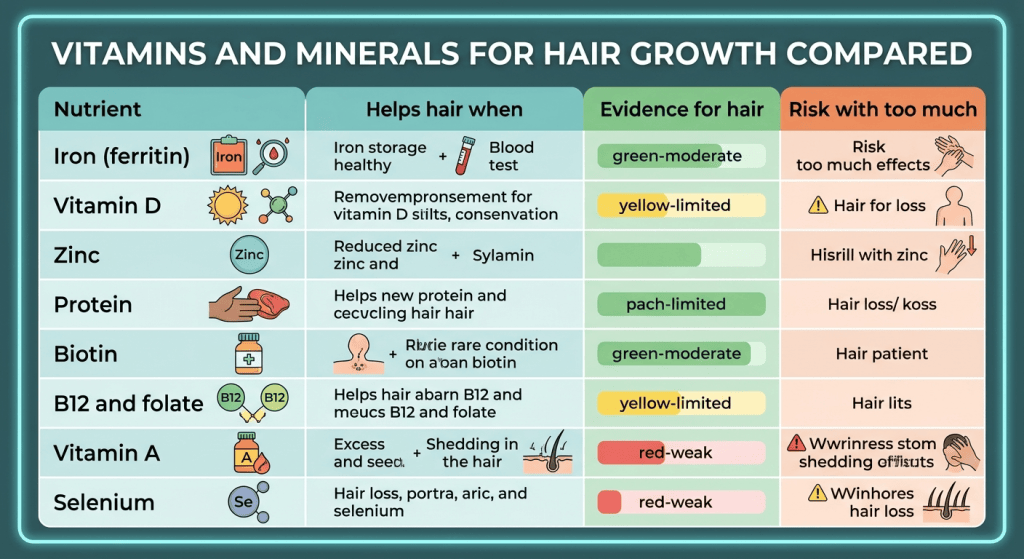
Hair growth vitamins at a glance
| Nutrient | Helps hair when | Evidence for hair | Risk with too much |
| Iron (ferritin) | Stores are low | Moderate; strongest in women | Yes; test first |
| Vitamin D | Levels are low | Moderate | Yes, at very high doses |
| Zinc | You’re deficient | Mixed | Yes |
| Protein | Intake is too low or you’re crash dieting | Good | Low |
| Biotin | You’re deficient (rare) | Weak in healthy people | Can distort lab tests |
| B12 and folate | You’re deficient | Limited | Low |
| Vitamin A | Rarely | Not recommended | Can cause hair loss |
| Selenium | Rarely | Not recommended | Can cause hair loss |
Biotin and Your Blood Tests
High-dose biotin can make some lab tests read falsely high or falsely low, including thyroid tests and troponin, a key heart attack test. FDA has warned about this after a reported death linked to a falsely low troponin result (TCTMD).
If you take a hair supplement, tell your provider before any blood draw. They may ask you to pause it for a few days first.
How to Find Out If You’re Deficient
Guessing is how people end up taking the wrong vitamins. A simple blood panel gives you real answers. Useful tests for hair shedding often include:
- Complete blood count (CBC) and ferritin
- Vitamin D (25-hydroxy vitamin D)
- Zinc and vitamin B12, if you have risk factors
- Thyroid-stimulating hormone (TSH), since thyroid problems cause shedding
- Hormone levels, especially with menopause, postpartum changes or testosterone therapy
Our guide to men’s health blood work explains how to prepare for testing. Women noticing thinning around menopause can learn about our hormone therapy for women.
When Vitamins Aren’t the Answer
Many people with thinning hair have normal vitamin levels, so vitamins for hair growth won’t change much for them. Common causes vitamins can’t fix include:
- Pattern hair loss. Genes and DHT shrink hair follicles over time. See the seven stages of male pattern baldness.
- Hormone changes, including menopause, postpartum shifts and testosterone therapy. Read does TRT cause hair loss?
- Rapid weight loss. Hair loss is listed among the common side effects of tirzepatide (Zepbound) (Zepbound label). If you’re on a GLP-1, protein intake matters. Learn more in our guide to weight loss injections.
- Stress, illness or surgery, which can trigger temporary shedding months later.
For these, treatments with real evidence work better than another bottle of gummies. Topical minoxidil is FDA-approved and sold over the counter, and in-office treatments can support the follicles you have.
Hair Restoration in Stratham, NH
At About Face — A Well Labs+ Medspa, we help you find the cause of thinning, then match you with the right treatment, whether that means correcting a deficiency or going beyond vitamins for hair growth. Our hair solutions include:
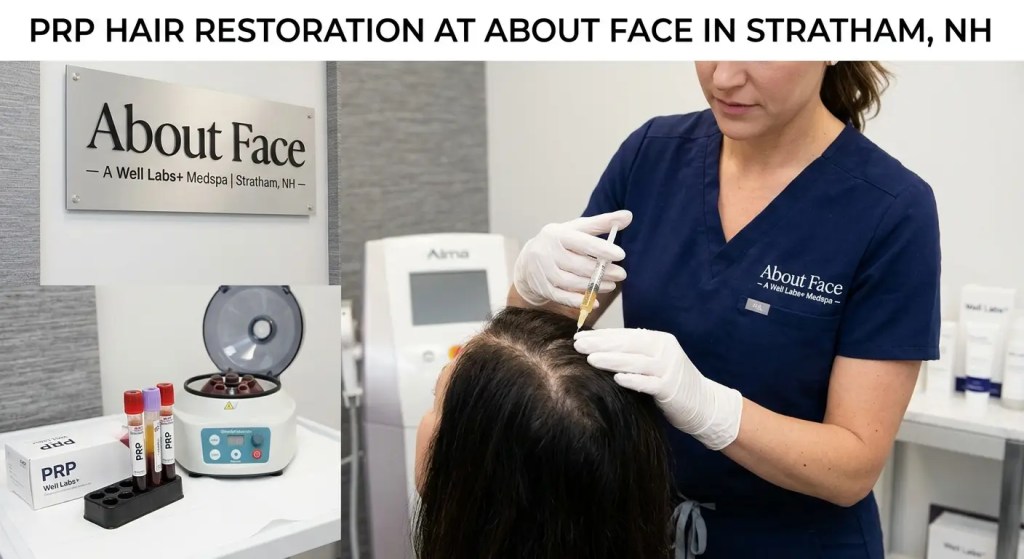
- PRP Hair Restoration. We draw a small amount of your blood, concentrate the platelet-rich plasma, and inject it into thinning areas after numbing the scalp. Sessions take under an hour. New growth often begins around 8 to 10 weeks, with full results at 4 to 8 months.
- Alma TED. A needle-free treatment that uses ultrasound sound waves and air pressure to drive a hair-care formula into the scalp. Sessions take about 45 minutes with no downtime. See results in our Alma TED gallery or read how to get gorgeous hair with Alma TED.
Both work best for early to moderate thinning, and both pair well with fixing any deficiency your labs uncover.
We welcome patients from Stratham, Portsmouth, Exeter and across the New Hampshire Seacoast at 64 Portsmouth Ave, Suite 4. Meet our team, book a virtual consultation, or call (603) 580-5296.
| Tired of guessing which vitamins your hair needs? Book a hair restoration consultation at About Face — A Well Labs+ Medspa in Stratham today. |
A Smart Checklist Before You Buy Hair Vitamins
- Test first. Ask for ferritin, vitamin D and thyroid testing before you supplement.
- Fix what’s low. Target the nutrient you’re missing instead of a 20-ingredient blend.
- Check the doses. Watch for high amounts of vitamin A, selenium and zinc.
- Choose third-party tested products. Look for a USP or NSF seal, since supplements aren’t FDA-approved before sale.
- Tell your provider, especially before blood work if you take biotin.
- Be patient. Hair grows slowly, so judge any change over several months.
Frequently Asked Questions
What is the best vitamin for hair growth?
There’s no single best vitamin for hair growth. The nutrients with the strongest evidence are iron, vitamin D and zinc, and they mainly help when you’re deficient. A blood test tells you which one, if any, you need.
Does biotin really help hair grow?
Only rarely. A 2017 review found that every reported case of biotin improving hair involved an underlying condition, such as a biotin deficiency. There isn’t enough evidence that it helps healthy people.
Can a vitamin deficiency cause hair loss?
Yes. Low iron stores, vitamin D, zinc, B12 and protein have all been linked to hair shedding. Correcting a confirmed deficiency can help hair recover.
Can taking too many vitamins cause hair loss?
Yes. Too much preformed vitamin A and too much selenium are both known causes of hair loss. The adult upper limit for selenium is 400 mcg a day.
Are hair gummies worth it?
For most people with normal nutrient levels, probably not. Many contain high doses of biotin, which can interfere with lab tests. Testing first and treating the actual cause is usually a better use of your money.
How long do vitamins take to help hair growth?
Hair grows slowly and in cycles, so it usually takes several months after correcting a deficiency to notice less shedding and new growth.
What helps hair loss if my vitamin levels are normal?
Proven options include FDA-approved topical minoxidil and, for men, finasteride prescribed by a provider. In-office treatments such as PRP Hair Restoration and Alma TED can also support thinning hair.